Some of you may remember my previous posts about secret Apollo missions: Apollo 18, the ill-fated landing which fell victim to rock spiders, and Apollo 20, a joint US-Soviet effort which recovered a living alien from the far side of the Moon. Both are fictional, of course. One is a horror movie, the other a lurid hoax. But there is just a grain of truth to them: NASA did, indeed, plan additional Apollo flights, all the way out to Apollo 20, only for budget cuts to keep them earthbound. These lost missions will be the subject of today’s post.

From A-class to J-class
NASA’s internal administration sorted the various flights of the Apollo program into alphabetical categories, from A to J. These paint a good picture of the ways Apollo missions were categorized, as well as the program’s long, not always straight trajectory, so we’ll use them for a quick recap:
- A: Uncrewed launches of the Saturn V booster with the command and service module (CSM). These were Apollo 4 and Apollo 6.
- B: Uncrewed flight of the lunar module (LM). Apollo 5 was a B-class mission.
- C: Crewed flight of the CSM in low Earth orbit. Any attempts at a manned launch were severely delayed after the deaths of Gus Grissom, Ed White, and Roger Chaffee in the Apollo 1 disaster, which forced a major reshuffling of the lunar program. Apollo 7, the only C-class mission, flew successfully after a 21-month hiatus in US manned spaceflight.
- C’ (C-prime): Crewed flight of the CSM to orbit around the Moon, achieved by Apollo 8 in December of 1968. This was a longer voyage than any other yet undertaken by humans.
- D: With the sole D-class mission, Apollo 9, NASA scaled things back a little, sending up astronauts to test a combined CSM and LM in low Earth orbit.
- E: Manned test of the CSM and LM in medium Earth orbit, above 2,000 kilometers. Never flown.
- F: Full dress rehearsal for a Moon landing. The LM for Apollo 10 flew to within 14.4 kilometers of the lunar surface, only to pull back to a higher orbit. NASA deliberately underfilled the LM’s tanks so that the astronauts wouldn’t go rogue and touch down anyway.
- G: A bare-bones lunar landing. The G-class mission, Apollo 11, famously delivered Neil Armstrong and Buzz Aldrin to the Sea of Tranquility. It was a short stay, however, with with only a few laps around the landing site, so its scientific value was limited compared to what would come later.
- H: NASA was starting to flex its muscles, undertaking precision landings with two-day stays on the surface. Apollo 12 touched down literally a stone’s throw1 from a previously launched space probe; Apollo 14 focused heavily on scientific experiments and sample collection. Apollo 13, of course, nearly killed Tom Hanks, so it didn’t get to land.
- I: Lunar survey missions; never flown.
- J: Apollo 15, 16, and 17 fell into the J-class. These were extended, multi-day missions, equipped with lunar rovers for covering immense stretches of terrain. They logged a large majority of hours spent and miles traveled on the Moon.

As we can see, NASA’s approach was slow, cautious, and incremental, adding just one or two capabilities between missions. Apollo 8 didn’t fly to the Moon without Apollo 7 having debugged the CSM; Apollo 11 only reached the surface after Apollo 10 had tested everything but the landing itself. Apollo 18, 19, and 20 would have continued this trajectory, instead of rushing straight to, say, a fully operational moon base—though NASA had toyed around with a moon base, as you’ll see below.
Soaring dreams, austere realities
For a period in the mid-1960s, the space program had some wide-eyed ideas about what to do after the initial landings on the Moon. These were encapsulated in the Apollo Applications Program (AAP), which sought to define future adventures using Apollo hardware: unmanned outer-planet slingshots, an Earth-orbit space station, and manned mission to Venus (!), among others. As far as the Moon was concerned, AAP looked at AES (Apollo Extension Series) and LESA (Lunar Exploration System for Apollo). You can tell NASA loves its acronyms…

The Apollo Extension Series was to be the first incremental step towards a permanent base, building on the J-class missions by offering a longer surface stay and more opportunities for scientific research. Design work began in May of 1966. Each AES flight would have used two Saturn V launch vehicles, spaced 90 days apart. The first was to send up a modified lunar module, the LM shelter, which would make an unmanned landing on the Moon. This rudimentary base camp would have contained enough space, life support equipment, and consumables to support a pair of men for 14 days. With its upper-stage engine removed, it was not capable of takeoff.
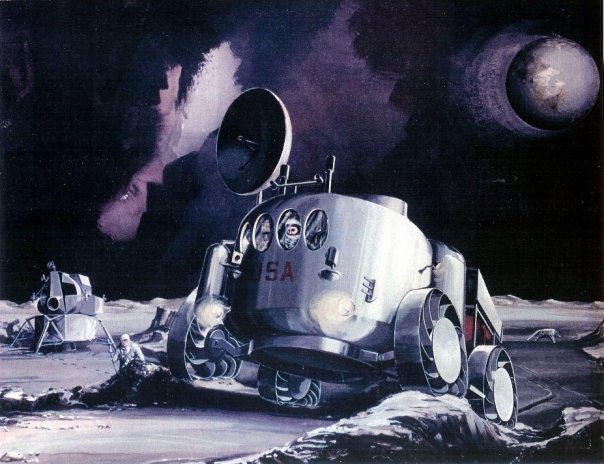
The second Saturn V, then, would follow with the LM taxi, carrying a pair of astronauts down to the waiting LM shelter. They would have had a vehicle for long-range exploration while they were there: perhaps a rocket-powered hopper, a rover, or even a wormlike crawler. NASA never quite committed to a design. At the end of their stay, they were to lift off in the LM taxi and dock with the mothership. While two astronauts explored the surface, the third would have orbited in the CSM—a lonely two weeks, to be sure.


AES would have been succeeded by the bigger, badder LESA, sometime around the mid-1970s. An upscaled lander, the Lunar Landing Vehicle, was to deliver heavy payloads, such as a pressurized long-range rover and a nuclear reactor for power. NASA planners even envisioned LM taxis rotating crews in and out of a permanent base, perhaps with multiple habitat modules joined together. All this would have been achieved using a truly mammoth number of Saturn Vs. Throughout the 1970s and 1980s, the night skies above southern Florida would have glowed orange with rocket fire.
Sadly, the monumental sums required to make that happen were not forthcoming, as the administration of Lyndon B. Johnson focused more on the Great Society and the raging war in Vietnam. NASA pulled the plug on AES and LESA in June 1968. The only portions of the Apollo Applications Program to survive were the space station, which would morph into Skylab, and the “Grand Tour” of the outer planets, which would become Voyager 1 and Voyager 2.

Apollo 18 and beyond
Even after the budget cuts, NASA had ambitious plans for the human exploration of the Moon. They had contracted for an initial run of 15 Saturn V rockets; Apollo 4, 6, 8, 9, and 10 had each used one for testing, which left ten for full-scale missions, from Apollo 11 all the way to Apollo 20. Somewhere in the multiverse is a timeline where twenty men walked on the Moon. Depending on how the schedule worked out, Apollo 20 might have departed Earth as late as 1974.

There was never a full, final schedule, complete with landing sites and crew rosters. Officials focused their main efforts on the nearer-term flights, while the later ones, up to three years out, were left open as contingencies. This makes it difficult to reconstruct exactly what Apollo 18, 19, and 20 would have looked like. It is known that they would have been J-class, like the preceding flights. In fact, the hardware for them mostly got built, with flight-capable CSMs, LMs, and Saturn Vs for Apollo 18 and 19. The CSM and LM for Apollo 20 ended up being scrapped before completion.
Possible destinations for the later flights appeared in a report on July 28, 1969, just eight days after Neil Armstrong and Buzz Aldrin touched down in the Sea of Tranquility. Apollo 18 was to land at Schroter’s Valley, perhaps the most prominent valley—or rille—on the lunar surface. Apollo 19 would have visited Hyginus, one of the few craters on the Moon created by volcanism rather than meteor impact. The authors proposed that Apollo 20 visit one of the Moon’s most spectacular sights: Copernicus, a young crater easily seen from Earth, with a rubble-strewn floor dominated by mountains. The jumble of rocks dredged up during its formation would have been a geologist’s dream.


Various reports suggested several additional sites, with proposals continuing from 1969 to the cancellation of the later Apollo missions. Some recommendations were made not by NASA, but by a private consulting firm, Belcomm Inc, which filed a lengthy briefing on March 11, 1970—after Apollo 20 was canceled, but before Apollo 18 and 19 got the axe. You can read it in the NASA archives here. Apollo 18 was redirected to Copernicus, while Apollo 19 was supposed to visit the Hadley-Appenine region, which would eventually become the landing site for Apollo 17.
One of the more intriguing candidates was the area around the Marius Hills. Apollo 20 might have gone there in July 1974. These hills are a set of volcanic domes, averaging 500 meters high, marking a region that was extremely geologically active in an earlier period of the Moon’s history. Exploration here could have shed light on many still-unsolved mysteries of lunar science. The Marius Hills are also the site of one of the strangest surface features on the Moon: a sheer-walled hole in the landscape, about 65 meters wide and 80 deep, formed by the partial collapse of an underground lava tube. This hole was only discovered in 2009 by the Japanese SELENE orbiter, so NASA had no idea it existed at the time of the Apollo missions. Perhaps the crew of Apollo 18 or Apollo 20 might have stumbled across it?

Walking on the far side
There is one more missed opportunity that deserves mention. While all missions to date had taken place on the near side of the Moon, astronaut Harrison Schmitt tried to persuade NASA to send his upcoming Apollo 17 flight to the far side. That would not be easy. Without Earth hanging constantly in the sky above the landing site, there would have been no way for the astronauts to communicate with Mission Control. If any issues came up during the descent—as had happened on Apollo 11—they would have been on their own.
Schmitt thought the benefits outweighed the risks. He was a geologist2 by trade, the only civilian scientist recruited to fly on the Apollo missions, and he saw promise on the far side. Unmanned reconnaissance flights had shown it to be dominated by rugged highlands, as opposed to the low, dark, lava-covered “seas” that we see from Earth. Something had happened during the Moon’s formation to make one side so different from the other; Schmitt wanted to figure out what. To solve the issue of communication, he proposed to place a relay station in a high lunar orbit, using one of the existing (and highly successful) TIROS satellites. The destination would have been Tsiolkovsky crater, an enormous basin of lava surrounding a central peak.


Schmitt’s idea fell on deaf ears. Nobody in the administration was keen to take risks with the last Apollo mission, and in any case, they couldn’t scrape together enough money for it. Apollo 17 went to the Taurus-Littrow valley on the near side. The far side of the Moon would not see any (soft) landings until 2019, when the Chinese Chang’e 4 lander touched down in the Von Kármán impact crater. Its relay satellite, Queqiao, used a remarkably similar orbit to what Harrison Schmitt had proposed.

Cuts and cancellations
Funding decisions had a considerable lead time. Apollo 18, 19, and 20 were scrapped years before the missions themselves were expected to fly. Apollo 20, at the far end of the chopping block, was the first to go: NASA canceled it on January 4, 1970, after Apollo 12 and before Apollo 13. This decision freed up a Saturn V for Skylab, enabling it to launch as a “dry workshop” rather than a “wet workshop.” The wet workshop, the original plan, would have launched into orbit the upper stage of a smaller rocket, the Saturn IB. Astronauts would then have refurbished the empty tanks of this stage into a usable space station. The dry workshop, launched pre-prepared and ready for habitation, was much more practical from a planning standpoint, but it needed a Saturn V. Thus, no Apollo 20.
There were briefly plans to launch the last three Apollo missions (17, 18, and 19) in 1973 and 1974, after three flights to Skylab near the start of the decade. Development issues with Skylab forced those to switch places. Apollo 18 and Apollo 19 were subsequently canceled on September 2, 1970, leaving Apollo 17 as the final flight for December of 1972. This was a miserly act of penny-pinching; two full spacecraft were ready to go, but the Nixon administration wouldn’t give NASA the funds to actually launch them.

It could have been even worse. Nixon went after Apollo 16 and Apollo 17, too, though his deputy budget director, Caspar Weinberger, eventually persuaded him to leave them alone. Those last two missions flew in April and December of 1972, proving to be scientific goldmines thanks to their extended stays on the surface. When Apollo 17 took off from the Moon, on December 14, it began a hiatus in human lunar exploration that continues to this day.
What we got: Skylab and beyond
NASA’s main priorities after Apollo were Skylab and the Space Shuttle. The latter, after numerous delays, wouldn’t fly until 1981, during the presidency of Ronald Reagan. The former was America’s first space station, active between May 1973 and February 1974. Three successive crews went up in spare Apollo command and service modules, using the remaining Saturn I boosters, and they logged about 24 weeks in space. No additional CSMs or other hardware remained in production; NASA was simply expending its stockpile left over from the Moon missions.

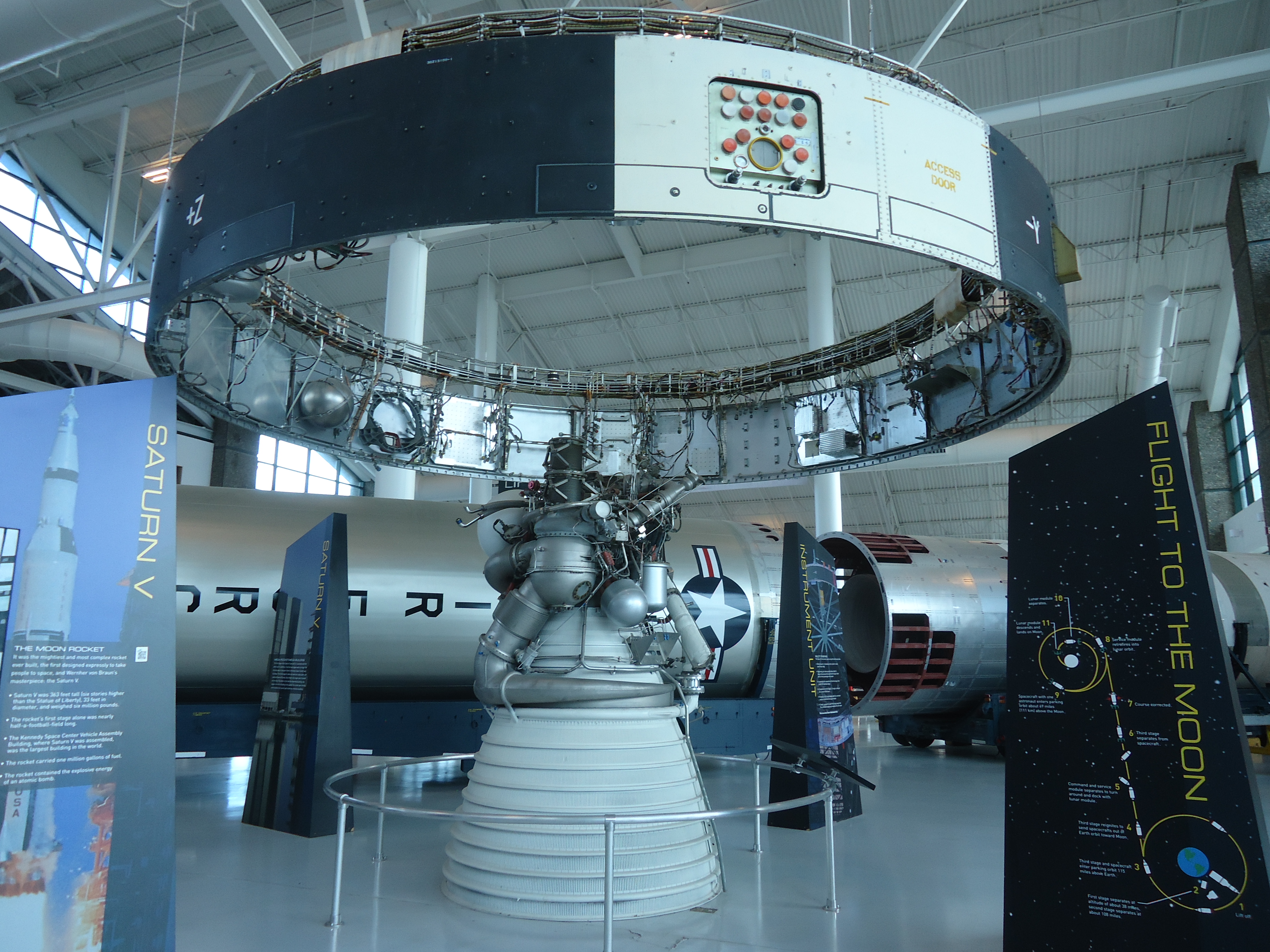
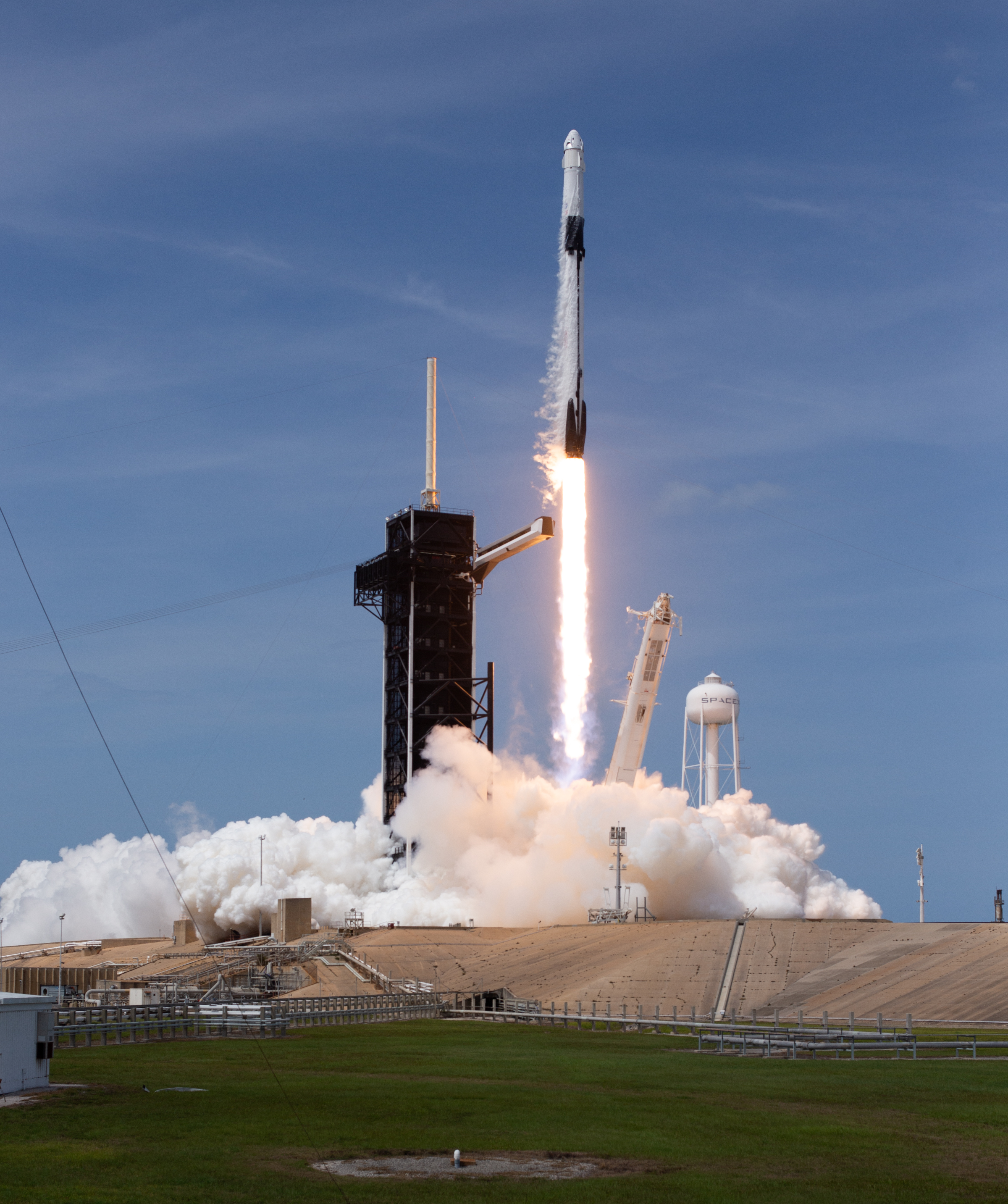
The last hurrah for the Apollo program took place on July 15, 1975, when an Apollo CSM and a Soviet Soyuz separately took off and docked together in orbit. This joint endeavor, a high point for US-USSR relations, began a six-year gap in US spaceflight, during which we had no ability to launch humans into space. All the remaining human-capable capsules and rockets were turned into museum pieces. To name just two, you can find a full Saturn V (kitbashed from various missions) on display at the Kennedy Space Center, and the Apollo 19 CSM, with another Saturn V, at the Johnson Space Center.

To be honest, I don’t believe Apollo 18, 19, and 20 would have made any grand changes to the course of history. As J-class missions, they would have been basically the same as Apollo 17, the main difference being their destinations—some of which would have offered gorgeous views, and yielded terrific dividends for science. Still, humanity lost something with the last of the Apollo missions. The great adventure ended too soon, like a TV series canceled one season early3, or a torrid love affair called off suddenly over text. Skylab and the Space Shuttle just didn’t have the same magic as spacemen roaming the surreal, rock-strewn vistas of the Moon, all black skies and stark shadows and powdery grey soil. Humanity traveled so very briefly in the dreamlands; more than fifty years later, we have yet to return.
As always, thanks for reading! I’d love to hear any comments you might have. What do you feel was the biggest missed opportunity with the Moon landings? Did NASA make the right call in pivoting to Skylab and the Space Shuttle?
If you’re not already on my mailing list, don’t forget to subscribe on your way out—there are many more pieces on space travel and sci-fi coming in 2025, and you won’t want to miss them.
One last note: We are moving to a Wednesday-morning posting schedule, rather than Sunday. So next Wednesday, on January 8th, I’ll catch you all again with an explosive book review…
Happy New Year!
- Well, 500 feet, but I’m assuming you can throw a stone pretty far in lunar gravity. ↩︎
- Schmitt had originally been slated for Apollo 18. When that mission was canceled, the community of Earthbound scientists still insisted that one of their own make a Moon landing, so NASA moved him up a spot—costing Apollo 17’s original lunar module pilot, Joe Engle, his chance to walk on the Moon. Engle took it well; he later told the New York Times, “When you think about it, the lunar missions were geology-oriented.” He went on to play a major role in the Space Shuttle program, commanding STS-2 and STS-51-I. ↩︎
- Incidentally, I’m still mad about the fifth season of Enterprise. ↩︎
Discover more from Let's Get Off This Rock Already!
Subscribe to get the latest posts sent to your email.