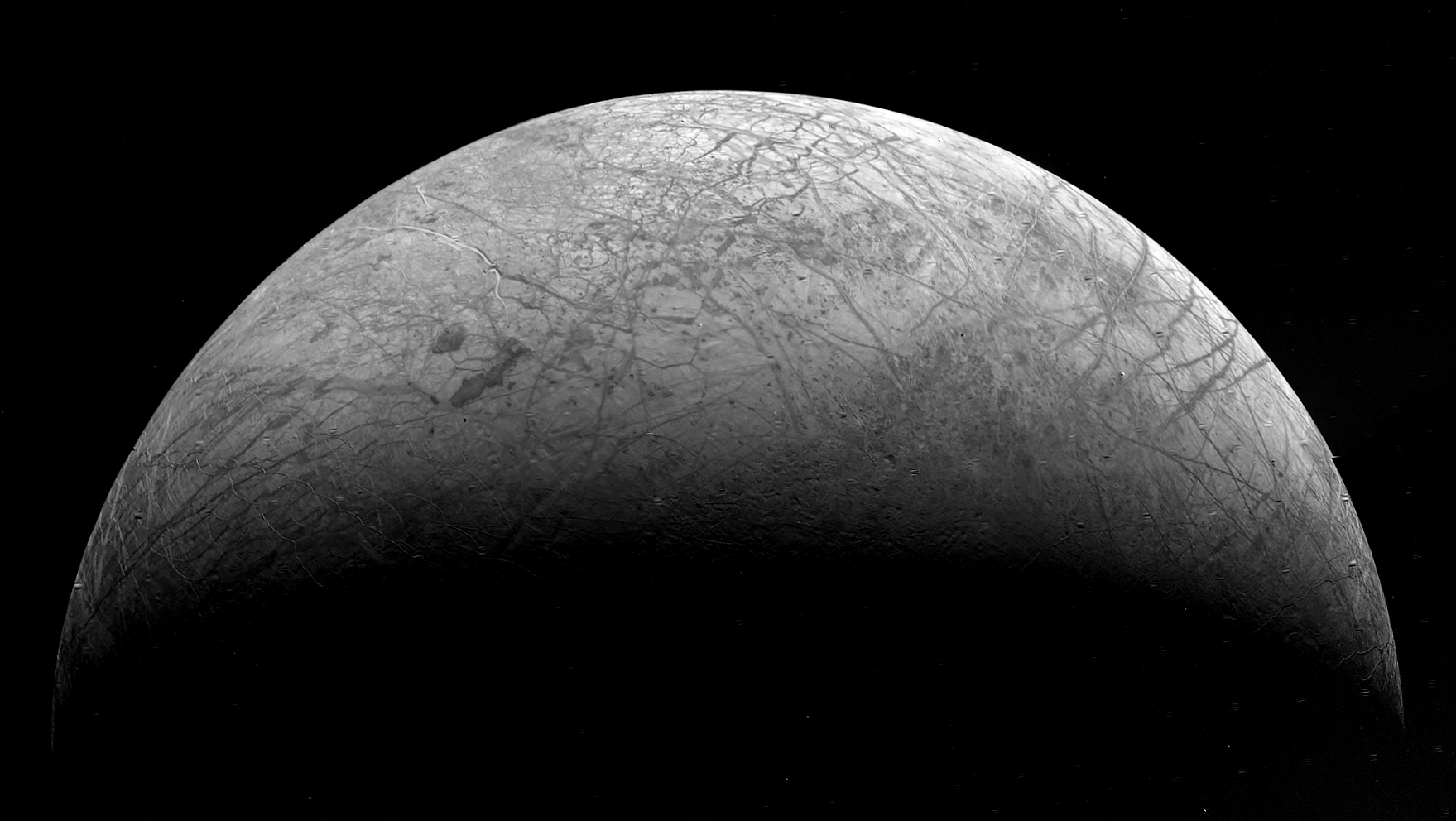
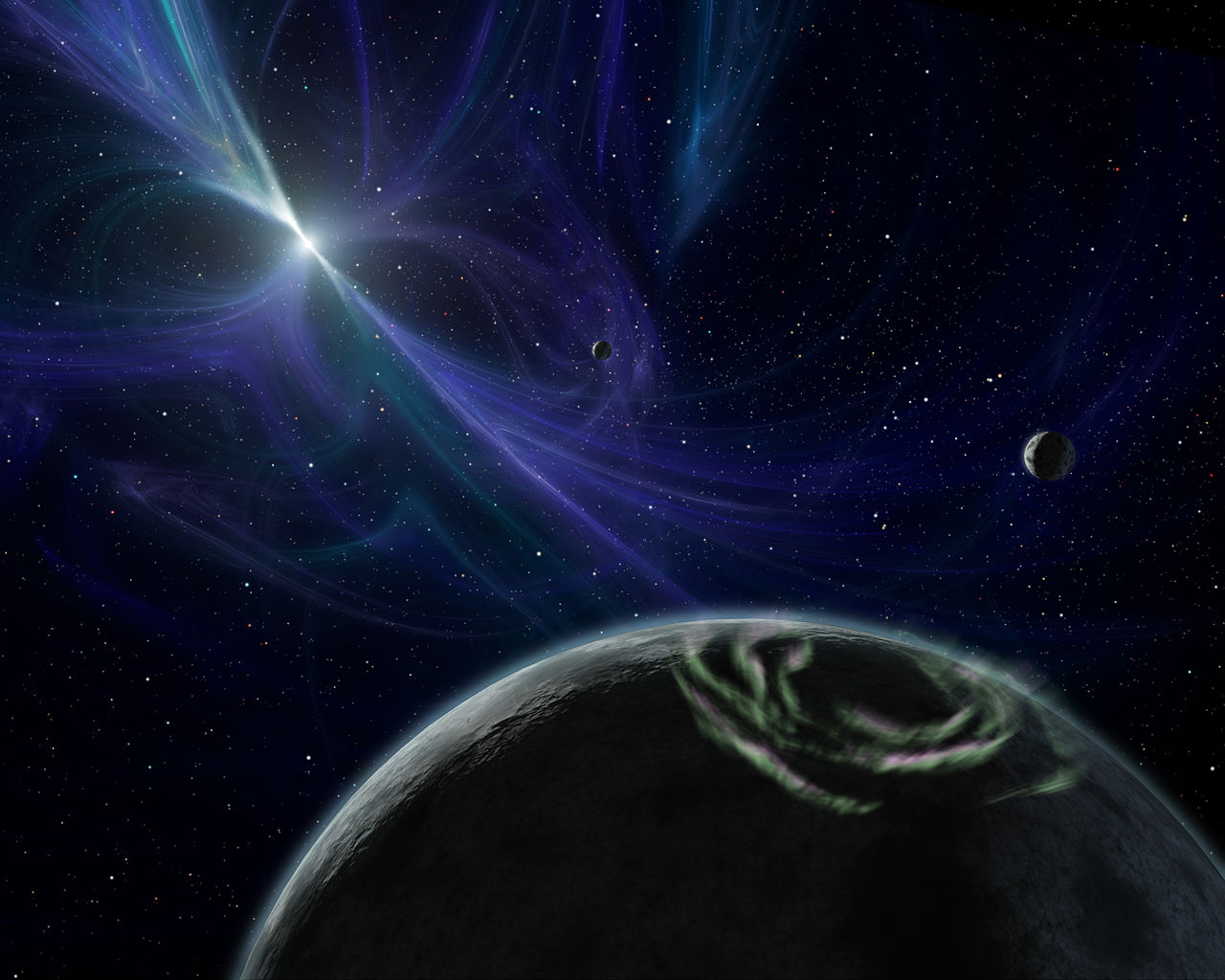
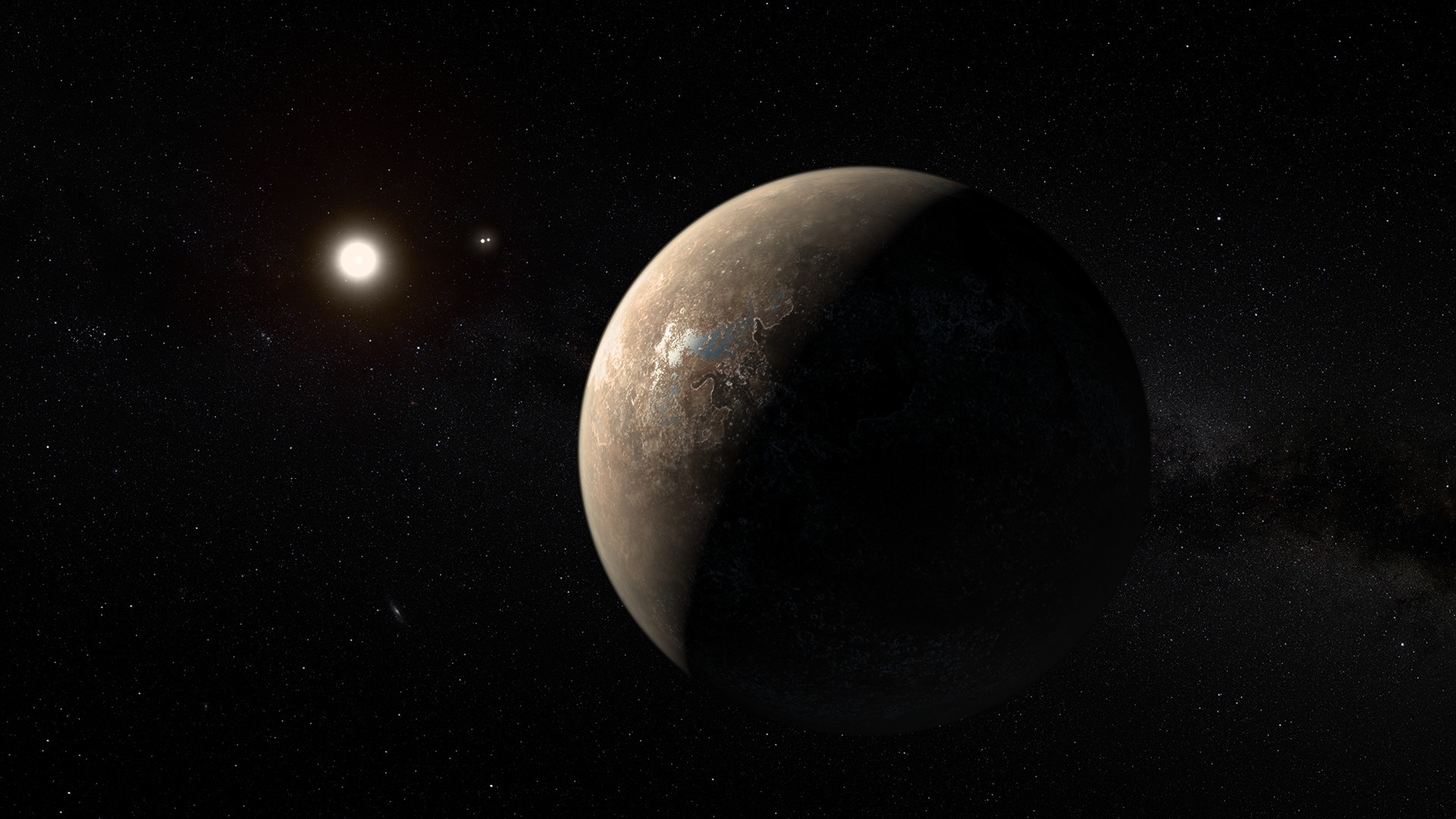
Not all the worlds in our solar system are created equal. Some are enormous, some are vanishingly small; some are scorching hot, others freezing cold; some (one) are clement to human life, while some (all the rest) are inhospitable deathtraps. And if I may be frank—some are just better than others. For today’s post, we will rank the planets from worst to best, using the most objectively scientific metric of all: how much I, the author, like them.

Note that the word “planet” has a contested definition. For this article, we will include not only the eight IAU-recognized planets, but also the two dwarf planets (Ceres and Pluto) that have been explored in detail by human spacecraft. Other dwarf planets (Quaoar, Eris, Sedna, etc.) will be left out. Anyway—on to the list!
10. Ceres.

First up: Ceres. Not a lot going on here. It is a roundish gray potato orbiting midway between Mars and Jupiter, much too small and dim to distinguish with the naked eye. Only in 2015, with the Dawn probe, did we get a good look at it—and while we discovered some intriguing features, such as mysterious bright spots and hints of saltwater-powered cryovolcanism, it’s hardly the most picturesque spot in the Solar System. I put it in tenth place.
9. Mercury.

Mercury, the closest world to the Sun, is also in the “so-so” category. For one thing, it’s a pain in the ass to observe from Earth—it hangs out in the Sun’s glare, only visible for a few brief periods throughout the year, and even then you can just barely make it out in the evening sky. It isn’t easy to get to, either; since it orbits the Sun at breakneck speeds, near the bottom of a gravity well, it actually takes more fuel to enter orbit around Mercury than it does to visit Pluto. Probes like MESSENGER and BepiColombo have gotten around this with slingshot maneuvers, using the gravity of Earth and Venus to slow themselves down1 until they can eventually match Mercury’s path around the Sun.
So, all that effort to send a space probe to Mercury, and what do you find? Something very much like the Moon, except without the Moon’s famous lava seas. Just craters as far as the eye can see. Mercury is notable for its extremely large iron core, but all the metal got sucked into that core long ago—leaving only plain, ordinary rock on the surface, pretty much identical to what the Apollo astronauts were hopping around on. It’s all rather… underwhelming.
8. Uranus.

Now, Uranus has its charms. It orbits sideways, giving it a bizarre cycle of seasons, and its magnetic field is even stranger, offset both from the planet’s center of mass and from its axis of rotation. Even so, it’s overshadowed by the other worlds on this list. Given the featureless blanket of haze covering its cloudtops, and its selection of small, drab moons with little to distinguish them, Uranus must, unfortunately, be consigned to eighth place.
7. Pluto.

Pluto may not be a planet anymore, but it’s still quite the little world. It’s safe to say that it exceeded expectations when New Horizons flew past in the summer of 2015. You see, Pluto is far from dead—it’s a hotbed of cryovolcanism and cryotectonics, continually reshaping its surface, dynamic in ways almost nobody predicted. Mountains made from water ice float on plains of frozen nitrogen; an atmosphere of nitrogen, methane, and carbon monoxide, a million times more tenuous than Earth’s, is still enough of a going concern to shape dunes on the surface. It’s cool as hell—in both the figurative and literal senses of the word. For that reason, I give Pluto the #6 slot, ahead of two planets and the other major dwarf planet.
6. Jupiter.

Jupiter, king of the planets, is not quite king of this list. Why? It’s not because I don’t love Jupiter to bits—I do—but because it doesn’t have quite the same charm as some of the others I’m about to mention. Sure, it’s the largest planet, with an intricate system of interesting moons… but those cloud bands are a little garish, no? Almost too packed with detail, the polar opposite of Uranus’s bland features. And yes, the moons are a strong attraction, but none of them hold a candle to Titan. Though it is pretty cool watching them through a telescope.
Jupiter only loses out because we’re getting to the top half of the list, and there is some stiff competition ahead.
5. Saturn.

On to Saturn. Saturn has a claim to being the prettiest of the planets—small wonder it was a setpiece in Interstellar. Just look at those rings! And its cloud bands are tastefully subtle, yet still intricate enough to make for some terrific cloudscapes. The best thing about it, though, is its largest moon, Titan—the only other world around the Sun that has liquid on its surface. Titan has its own lakes, rivers, clouds, and winds, with methane taking the place of water, and water ice taking the place of rock. It is Earth viewed through a funhouse mirror, familiar features manifesting in bizarre ways. Indeed, Titan, and its parent planet, are among the greatest attractions of the Solar System.
4. Mars.


What tour through the Solar System would be complete without a trip to the Red Planet? Mars has captured our imaginations for a long, long time. It’s easy to see why—it is very close to us, presenting a tempting target for exploration, and it has many features like Earth’s, even if the old tales of Martians and canals didn’t pan out. Mars takes pride of place in any discussions about building a long-term human presence off-world. I, personally, am not quite as bullish on Mars as many people; it’s a cold, barren, and nearly airless desert, a tough sell for any attempts at colonization, though not insurmountable. Even if Martian cities aren’t in the cards, I do hope to see manned outposts there within my lifetime.
Mars gets a high spot on this list. Not that high, though—I think it’s overrated, compared to a couple of underrated gems which we will promptly explore.
3. Neptune.


The spooky planet! Bane of experimental faster-than-light spaceships, and Brad Pitt. Neptune gets a lot of points in my book for its mystery, remoteness, and atmosphere. It’s all the way out at the edge of the Solar System, so far that despite being many times the size of Earth, it was only discovered by mathematical inference in 1846. Its atmosphere is wracked by howling winds. Its largest moon, Triton, is believed to be a straggler captured from the Kuiper belt, even further out. And Triton is a fascinating world on its own merits; it hosts active cryovolcanoes, spitting plumes of soot into an impossibly tenuous atmosphere.
I have a soft spot for Neptune. Sue me. It gets third place—5 spooks out of 5, would visit again.
2. Venus.

And for the second spot—Venus. The Morning Star. When Venus makes her appearance in dawn or dusk skies, there will be no mistaking her. Far from the ruddy tint of Mars, or the yellowish glow of Saturn, Venus shines at night with a pure white light, bright enough to cast shadows. Through a telescope she looks no less stark: a brilliant white billiard ball, shrouded with clouds, changing phases as she orbits around the Sun. Mesmerizing, quite simply. Of course, there is more than meets the eye—descend beneath the Venusian clouds and you will find a rocky, volcanic hellscape, impossibly hot, with an atmosphere so thick it is no longer a gas at all, but a supercritical fluid. Only in the cloudtops is there any hope of existing life, or of colonization by humans.
Venus gets second place for its unique extremes, and for being so damn pretty in the night sky.
1. Earth.

There’s no place like home. As gorgeous as the other worlds are, Earth is the greatest of them, not least because we all live here2. Only on Earth can you find blue seas and puffy white clouds; only Earth has forests, and breathable air, and living creatures. The beauty of Saturn or Venus still can’t rival that of the human home world, a green island in the vast wilderness of space. Let’s keep it green and beautiful.
Well, there you have it: the definitive ranking of the planets, as unbiased as it is scientifically rigorous. No other debates need be undertaken, because I have settled the matter once and for all. If, for some reason, you disagree, don’t hesitate to drop a comment below—I look forward to hearing your opinions, wrong as they may be 😉
One item of housekeeping: we are going back to a Sunday posting schedule, starting today. I’ll see y’all next weekend!
- And paradoxically, speed themselves up. Orbital mechanics is weird like that. The short of it is, if you reduce your speed at the high point of your orbit, the low point of your orbit gets lower in altitude—but since it is lower, and closer to the body you’re orbiting, you will be moving a lot faster at that point. ↩︎
- If you are reading my blog and you do not live on Earth, please send me an email. I’d jump at the chance to interview an astronaut and/or alien. ↩︎
Discover more from Let's Get Off This Rock Already!
Subscribe to get the latest posts sent to your email.