
The absolute smallest angular distance resolvable by the human eye is 28 arc-seconds1. That’s about 0.008 degrees, or the apparent size of a quarter at 132 meters, and for those of us not blessed with impeccable vision, that value will be a lot worse. Thankfully modern technology far surpasses the limits of human eyesight, seeing down to atomic scales and in exotic spectra; for the vast majority of history, though, those limits circumscribed everything that could be understood about the universe. Even the wisest scholars, peering into the stars on cold, clear nights, could only ever see the stars and planets as points of light2, the Moon as a tiny, speckled circle, the Orion Nebula and Magellanic Clouds as faint smudges. Today’s post is about the invention that changed all of that forever: the humble telescope.

Precursors—and early inventors?
Scientific scrutiny of the properties of light dates all the way back to classical antiquity. Around 300 BC, Greek mathematician Euclid used geometric principles to describe the behavior of light rays, and Claudius Ptolemy, active in Roman Egypt in the second century AD, studied the refraction of light traveling through water and glass. By the Middle Ages, monks were using primitive lenses called reading stones to help them decipher small text. Eyeglasses appeared in northern Italy in the 1200s. Gradually, over many centuries, the scholars and tinkerers of Europe and the Middle East laid the foundations for a brilliant new tool—and as the Renaissance dawned, someone only needed to put the pieces together.
Both the “when” and the “who” of the first telescopes remain a murky issue. It is well established that telescopes first entered widespread use in the Netherlands in 1608—a hectic event which will be discussed in greater detail below—but there are sources which might indicate a separate, earlier genesis. Historians have put forward several contenders around the tail end of the 16th century and the beginning of the 17th. While some are better substantiated than others, let’s take a look at the claims.

One of the more intriguing possibilities comes from Elizabethan England. Astronomer Thomas Digges wrote in 1571 that his father, Leonard Digges, had devised a “fare seeing glass” which “by proportional Glasses duly situate in convenient angles, not only discovered things far off… but also seven miles off declared what hath been done at that instant in private places.” Queen Elizabeth’s advisor commissioned a report in 1580 that provided further details: the elder Digges’ far-seeing glass consisted of a very large mirror, specially curved, which reflected the image that came through a smaller lens. Such a design would have been too unwieldy for practical use; modern historians have also cast doubt on its claimed performance. Nevertheless, some scholars, such as Colin Ronan of the Royal Astronomical Society, have maintained that Leonard Digges deserves credit for the invention of both refracting and reflecting3 telescopes.
Other theories point to a household name: Leonardo da Vinci. When he wasn’t busy designing tanks and flying machines, pioneering groundbreaking discoveries in anatomy, or creating some of the greatest paintings of all time, he might have beaten everybody else to the invention of the telescope—because his resume clearly wasn’t packed enough to begin with. He is already recognized for his theoretical studies of optics; according to physics professor Alessandro Bettini, passages and drawings in his Codex Atlanticus seem to indicate that he combined two lenses, spaced at a distance from each other, in order to get a better view of the Moon. As da Vinci himself stated it: “Make glasses to see the moon big.”


Did Leonardo da Vinci put his idea into practice? We don’t know. He never seems to have produced any particularly detailed drawings of the Moon or other celestial objects, exceeding what can be discerned by the human eye. Quite possibly, he was just jotting down some speculations in his notebook, and his prodigious mind quickly moved on to other matters. At the very least, though, his drawings foreshadowed what was to come.
A revolution in the Netherlands
That brings us to 1608. Hans Lippershey, a glassmaker by trade, applied for a patent with the States General of the Netherlands4 on October 2nd, describing an instrument that combined two lenses for “seeing things far away as if they were nearby.” It wasn’t much by modern standards; it could only magnify three times larger than life. Later stories claimed he had gotten the idea from a group of children playing in his workshop, who had used discarded and defective lenses to look at distant objects. The States General, impressed with Lippershey’s device, awarded him a manufacturing contract—but he did not receive the patent.

Why did they turn him down? Because by the time he applied, word of the telescope had already spread far and wide across the Netherlands, and everybody was making them. In fact, another glassmaker named Jacob Litius tried to patent a similar design just weeks afterwards. The Dutch parliament denied both applications. Manufacture of the “Dutch perspective glass” remained a free-for-all, with workshops churning out the devices left and right.
Commercial demand for telescopes had at this point very little to do with scientific research. At only three times’ magnification, the model presented by Lippershey would have been a poor tool for astronomy, anyway. Where these early designs were considered useful was in the military realm—with a spyglass in hand, a commander could much more easily survey enemy strongpoints, monitor the movements of his own formations, and hopefully secure a decisive edge in the wars then ravaging Europe.

Some, however, had enough imagination to turn the telescope skyward. Throughout late 1608 and early 1609, reports of the new Dutch perspective glass spread across Europe, and a scattering of scientists immediately realized its applications for astronomy. Englishman Thomas Harriot bought a Dutch-made instrument with six times’ magnification, using it in August 1609 to produce the first ever telescope-aided maps of the Moon. While these were rudimentary at first, barely improving on the “Man in the Moon” that can be distinguished with the naked eye, he had the privilege of treading on brand-new ground—nobody had ever seen the Moon like this before.

Galileo’s telescope
It was Galileo Galilei who would truly usher in the age of telescopic observation. Born in 1564 in Pisa, Italy5, the oldest son of a well-to-do lute player, Galileo had by this point in his life become an accomplished astronomer, engineer, and physicist, occupying a professorship at the University of Padua. In June of 1609 he traveled to nearby Venice, where he heard a rumor of a new Dutch device for magnifying distant objects. While he had few details to work with, he was nevertheless able to construct a prototype within a day of returning to his workshop, affixing a concave lens and a convex lens to opposite ends of a wooden tube. This basic design would become known as the Galilean telescope.


The first lens converged incoming rays of light to a focal point, while the second, close to the user’s eye, diverged them again, this time at a larger angle than before. It was this difference in incoming and outgoing angles that produced magnification. Over the next few months, Galileo followed up his first telescope with instruments of greater and greater power; the final iteration was almost a meter long, magnifying 27 times. When he presented his design to the doge6 of Venice, Leonardo Donato, he was rewarded with lifelong tenure at the University of Padua, as well as a doubling of his salary.

Even though he built his first prototype in June, it took until November for him to point a telescope at the Moon and write down what he saw. Perhaps he spent the intervening time occupied with other projects; perhaps he was just unlucky with the weather. I’ll only say that I, personally, have never been anywhere near that patient when it comes to trying out a new toy. Regardless—when Galileo finally put his invention to use, he saw the Moon as a whole world of its own.
The Moon and Jupiter
Ancient Greek philosophers had assumed that the Moon was perfectly smooth and spherical. Rather than being made of rock, like the Earth, it had to be composed of star-stuff, something gleaming and ethereal. This belief remained unchallenged into Galileo’s time, with the additional Christian implication that God had made the Moon to fit into a meticulously tuned clockwork cosmos. But Galileo and his telescope proved otherwise. When the face of the Moon was only partially lit, hills, craters, and valleys stood out sharply on the boundary between light and darkness. In his 1610 pamphlet on his discoveries, Sidereus Nuncius, he meticulously sketched his views of the Moon’s phases and the terrain features they put into relief, illustrating a world that was far from the flawless orb of Ptolemaic cosmology.

Galileo was just getting started with his paradigm-defying discoveries. Remember that the prevailing model at the time was geocentric—all objects in the universe revolved solely around the Earth, which lay immovable and permanent at the center of creation. Imagine the controversy, then, when he found that the planet Jupiter had its own companion objects. He discerned three of them, at first; the fourth, fainter than the others, only revealed itself after careful study. From night to night they changed positions, never straying from Jupiter’s side. And they always contained themselves to a more or less straight line running through the planet. What could explain these observations, besides a system of orbiting moons? And if those moons could revolve around Jupiter, then so, too, could Earth revolve around the Sun.


There were many who rejected Galileo’s claims out of hand. It didn’t help that, given the primitive state of optics across Europe, few were able to confirm his observations. Critics claimed his telescope was simply splitting the light from Jupiter and creating phantom objects near it. Or that he was lying. But the Jesuit astronomer Christopher Clavius, based in Rome, soon confirmed the discovery Galileo had made, and as more and more saw the new moons with their own eyes, the initial wave of doubt faded away.
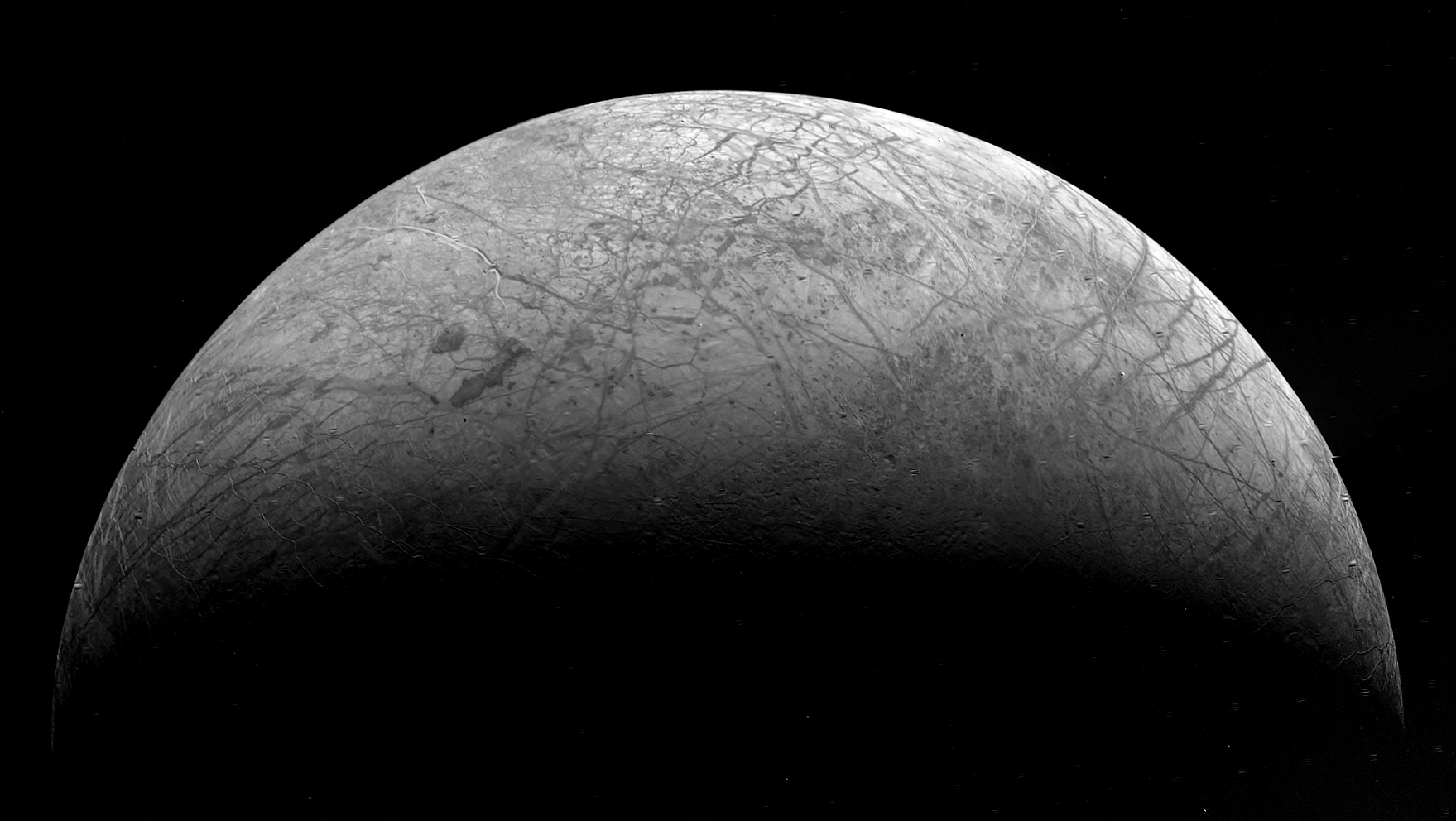
Today we know the Galilean satellites as Io, Europa, Callisto, and Ganymede. But those were not the names Galileo himself picked for them. He first called them the Cosmica Sidera (“Cosimo’s stars”), after Cosimo de’ Medici, Grand Duke of Tuscany, and then settled on the Medicea Sidera (“Medician stars”), honoring Cosimo and his three brothers. You see, Galileo had been Cosimo de’ Medici’s private tutor; by dedicating the new discovery to the House of Medici, Galileo hoped to secure patronage from the Grand Duke’s powerful family, and perhaps a university appointment. As he himself put it in a letter to Cosimo:
“Scarcely have the immortal graces of your soul begun to shine forth on earth than bright stars offer themselves in the heavens which, like tongues, will speak of and celebrate your most excellent virtues for all time. Behold, therefore, four stars reserved for your illustrious name.”
Thankfully, this shameless attempt at ass-kissing failed to catch on. The scientific community instead followed the lead of Simon Marius, a German, who discovered the moons independently around the same time as Galileo, and at the suggestion of fellow astronomer Johannes Kepler named them after mythological lovers of Zeus7. Io was a princess from Argos whom Zeus transformed into a cow in order to hide her from his jealous wife, Hera; Europa was a Phoenician princess, whom Zeus abducted by transforming8 himself into a bull and carrying her off on his back; Ganymede, a young man and the most handsome of mortals, was kidnapped to serve as Zeus’s cup-bearer on Mount Olympus, while Callisto, a nymph, was seduced by Zeus in the guise of the hunting goddess, Artemis. Galileo, for his part, hated these names and refused to use them.

Phases of Venus
Starting in September of 1610, Galileo began observations of the planet Venus. This world, too, was more than met the eye—through the telescope it showed a full set of phases just like the Moon’s, transforming from a disk into a crescent and back again. The geocentric model had made a very different prediction; under the Ptolemaic system, the Sun existed on a spherical shell outside the orbits of the planets, and it was impossible for Venus to show a fully illuminated face to Earth, since that would have required it to be further away than the Sun. Obviously, that did not track with observed reality. Galileo viewed this as irrefutable proof of the heliocentric model.

Before publishing his findings, he wanted to make very sure he was correct about what he was seeing. Planets move slowly, and to gain a full understanding of Venus’s strange behavior Galileo had to keep coming back to his telescope, night after night after night. But he also wanted to make sure he was credited for the discovery. So he did something strange: he sent a coded message to Johannes Kepler containing the Latin sentence “Haec immatura a me iam frustra leguntur o.y,” which translates in English to “These are now too young to be read by me.” But that was only an anagram for its true meaning, “Cynthiae figuras aemulatur mater amorum” (“The mother of love imitates the shape of Cynthia”). Cynthia was then an alternate name for Artemis, goddess of the Moon; the mother of love was, of course, Venus. Even if Kepler had no chance of understanding the code, Galileo could point to it later as proof that he’d beaten Kepler to the punch.
It is also possible that Galileo stole9 credit from someone else. The chronology isn’t terribly clear, four centuries later, but it seems that on December 5th, 1610, Benedictine monk Benedetto Castelli—a former student and friend of Galileo’s—wrote to him with a suggestion that he look at the phases of Venus through a telescope. Galileo’s coded letter to Kepler went out only a few days later, and from that point forward he maintained the discovery was his alone. In a December 30 letter he described his observations of Venus dating back three months. Was he lying? In this case Galileo has a fair share of accusers, as well as his defenders. Perhaps Galileo had written about the phases of Venus to Castelli, first, but the original correspondence has been lost to time, and only Castelli’s response survives. Perhaps Galileo was so desperate to prove a heliocentric universe (and boost his reputation) that he fabricated data. This episode could make for a blog post of its own, and I will draw no conclusions here—I’ll only note that this particular scientific icon may have had more questionable ethics than is generally assumed.
Spots on the Sun
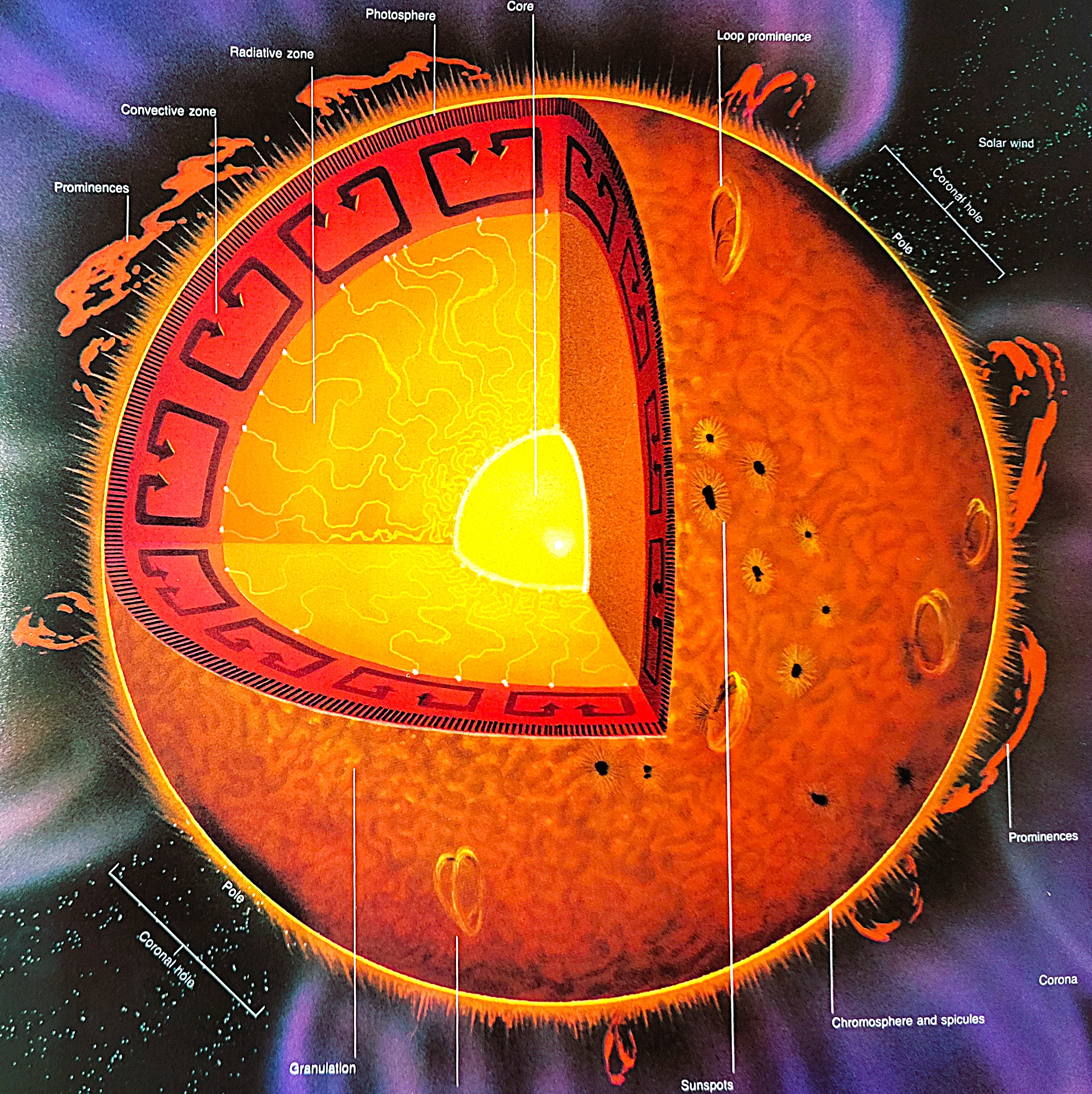
Sunspots are first attested in the Chinese I Ching, dating back to around 800 BC, which describes a dou and a mei on the sun—both words referring to some kind of darkening, or obscuration. Later Chinese astronomers would make many more records of such phenomena. A Greek, Theophrastus, wrote about them in the third century BC, and they also popped up in the early medieval Life of Charlemagne, in 807 AD. But the Christian world had a problem: God’s cosmos was supposed to be perfect. How could the sun have blemishes? For centuries, sunspots were explained away as the planets Venus and Mercury transiting the solar disk.


It was Galileo who proved the old model wrong, as he had in so many other areas. Or at least, he was the one who took credit for it—this discovery, too, would prove controversial. Let’s try to sort things out with a short timeline:
- June 1609: Galileo puts together his first prototype telescope. He had already made extensive naked-eye10 observations of sunspots, so some historians believe he soon used his new invention to observe them; there is, however, no solid documentation of this until 1612, three years later. He is reported to have shown sunspots to astronomers in Rome at an unknown date.
- December 18, 1610: Thomas Harriot—the English astronomer who produced the first telescope-assisted map of the Moon, above—records in his notebook that he observed sunspots through his telescope.
- March 19, 1611: Frisian11 medical student Johannes Fabricius and his father, David Fabricius, use a camera obscura—a pinhole camera—to project an image of the sun, noting sunspots. They publish their findings in a pamphlet that sees only limited distribution.
- March 1611: Jesuit Christoph Scheiner observes sunspots through a helioscope of his own design. This device used a telescope to project a magnified image of the sun into piece of paper in a darkened room; Galileo made his observations using a similar setup, instead of pointing a telescope at the sun directly.

- October 1611: Scheiner writes three letters to an Augsburg banker, Mark Welser, describing his sighting of sunspots, as well as his theory that they are objects orbiting around the Sun. He is unaware of the earlier observations by Harriot and the Fabricius father-and-son team. Welser publishes the letters.
- May 4, 1612: Via Mark Welser, Galileo composes a rebuttal to Scheiner, arguing that sunspots cannot possibly be satellites of the Sun, but are imperfections on its surface—a major blow at the idea of a perfect cosmos, which Scheiner is trying to defend. Galileo is also unaware of prior observations; he takes credit for being the first to see sunspots through a telescope, claiming that he has observed them for the past eighteen months.
What ensued was a long and bitter feud. Scheiner insinuated that Galileo had stolen credit for discovering the phases of Venus, and copied Scheiner’s own design for the helioscope; Galileo wrote a letter to Scheiner so insulting that Welser refused to publish it. Through the medium of scientific publications, barbs and taunts would pass between them for many years afterwards, and the rivalry only ended with Galileo’s death in 1642.
Glimpses of Saturn and Neptune
We will close our story with two curious instances where Galileo proved ahead of his time. Sixteenth-century science knew of only five planets: Mercury, Venus, Mars, Jupiter, and Saturn, the same five that had been known to humans since prehistory. Venus and Jupiter presented obvious features to the first generation of telescopes, as we have seen. Mars was a tiny reddish disk; Mercury was just a dot. Saturn, on the other hand, seemed to have something strange going on—though Galileo couldn’t quite tell what it was.

In 1610, Galileo turned his telescope towards Saturn and discovered that it wasn’t quite round. He thought it had “ears,” or maybe two gigantic moons on either side, somehow attached to the planet. His telescope lacked the magnification or clarity for him to resolve what he was really looking at: rings. Saturn’s rings would only properly be discovered in 1655, well after Galileo’s death, by Dutch astronomer Christiaan Huygens.
Then there is the case of Neptune. Neptune was discovered in 1846 by Urbain Le Verrier and John Couch Adams, who independently calculated its position from anomalies in the orbit of Uranus, and by Johann Gottfried Galle, who sighted it based on Le Verrier’s calculations. But we also know that Galileo spotted Neptune before any of them, even if he didn’t recognize it as a planet. Drawings dated to December 28, 1612 and January 27, 1613 show it among the background stars near Jupiter; Neptune’s immense distance from Earth, and the geometry of where it happened to be in its orbit, meant that it displayed very little apparent motion between those observations.

It’s possible, however, that Galileo recognized something strange about that small blue “star.” In 2009 the astronomer David Jamieson, from the University of Melbourne, claimed to have uncovered new evidence in Galileo’s notebooks showing that he had, in fact, noted its movement relative to other stars. But gleaning intent from centuries-old notebook scribblings is a fraught business; in any case, Galileo never followed up with further observations. It seems that more than two and a half centuries before modern science brought Neptune into view, Galileo came agonizingly close to seizing that glory for himself, only to fail to connect the dots and secure the discovery. That may have been for the best, though—he probably would have named it after some Italian nobleman he was schmoozing.
The telescope age
After Galileo led the way, the pace of astronomical discoveries showed no signs of slowing down. The next steps after the invention of the telescope—Huygens’ observation of Saturn’s rings and largest moon in 1655, Isaac Newton’s refracting design—deserve blog posts of their own someday, but are outside the scope of this one. It’s clear that astronomy after 1609 bore a night-and-day difference from what had come before. Among other things, Jupiter’s moons and the phases of Venus dealt a death blow to the geocentric model carried over from ancient times, proving decisively that Earth was not the center of creation.
When seen through a telescope, the universe was larger and stranger than anybody had ever imagined. Points of light in the sky were now whole worlds; the clockwork cosmos was actually a messy place, just like Earth. No longer did the frailties of human vision limit what could be known. Thanks to the tinkerings of Dutch artisans in their workshops, and the curiosity of astronomers like Galileo, the veil had lifted, once and for all.
Thank you for giving this one a read. Be sure to hit that subscribe button, and stay tuned next Sunday for an exclusive sci-fi horror short story, “Coming Home to Vancouver Station.” I’ll see you all then!
- An arc-second is 1/60 of an arc-minute, which is 1/60 of a degree, which is 1/360 of a circle. “Angular distance” refers to the apparent distance between two points as seen by an observer, rather than objective, physical distance. ↩︎
- There may actually have been exceptional cases where naked-eye astronomy revealed details of other planets. They are the subject of some debate, though, and they will be covered in a future blog post. ↩︎
- Refracting telescopes use lenses to magnify, while reflecting telescopes use mirrors. Isaac Newton is normally credited with inventing the reflecting (or Newtonian) telescope in 1668. Aside from the mysterious device produced by Leonard Digges, all telescopes discussed in this piece are pure refractors. ↩︎
- The name for the Dutch national legislature. ↩︎
- Though Italy as a coherent nation would not exist until the 1800s. At the time, Northern Italy was divided into numerous principalities and city-states, such as Florence, Venice, and the Papal States. ↩︎
- A political position unique to medieval and early modern Venice. The doge was the head of the Venetian state, chosen from among its oligarchic families and elected for life through a convoluted voting process. ↩︎
- Zeus being the original Greek equivalent of the Roman god Jupiter. ↩︎
- Yes, there’s a theme here. ↩︎
- This article doesn’t paint the man in a terribly flattering light, does it? ↩︎
- Again, this is not recommended. Note that Galileo went blind late in life, and staring at the sun certainly didn’t help with that. ↩︎
- Frisia is a coastal region in parts of the northeastern Netherlands, northwestern Germany, and western Denmark. ↩︎
Discover more from Let's Get Off This Rock Already!
Subscribe to get the latest posts sent to your email.

















.jpg)

Great survey of the history, especially the pre-1600s info!
Thank you! This one was a lot of fun to research, LOL.