
Today’s post will be a tad unusual—a personal essay about a fond memory, not unlike my Star Trek piece from a while back. Enjoy!
For all that I’ve been enthralled since childhood by the mysteries of deep space, reverent of humanity’s forays beyond this rock we call home, I went through most of my life with very little interest in stargazing. While these days I’ve made a tradition of taking my telescope out with a friend every couple of weeks, that is only a recent phenomenon; it used to be that the business of actually looking at space seemed pointless to me. The views from Hubble and Cassini far surpassed anything I could achieve with backyard optics, and I was always more interested in stars and planets, the objects themselves, than in the intricacies of puzzling them out from Earth’s parochial vantage point. Constellations were for sailors. I could identify only the two most obvious ones, Orion and the Big Dipper, while the rest of the sky was just scattered lights, void of form, utterly unnavigable—until the summer of 2022.
My entry into astronomy was preceded by a few halting forays. At a beach house in May of that year, I thought to point a pair of birdwatching binoculars through gaps in the clouds, and a few months later I purchased a paperback constellation guide in preparation for a trip to backwoods Minnesota. But the real occasion came in August, while some buddies and I were goofing off atop a sand dune on the Oregon coast. With the help 0f some proper stargazing binoculars, and more than a few beers, the universe opened up to me; at the age of twenty-four, I caught the astronomy bug.

We went camping as a trio, the same three young men who had been playing Minecraft together a decade earlier. The oldest friendships are often the most valuable, and I value these two friends quite a bit. Our destination was Nehalem Bay; summer trips there had become something of a yearly tradition, complete with long walks, fish and chips at a Manzanita food truck, and nighttime fire pits tucked away high among the sand dunes.
This time I took the liberty of bringing a tripod and a set of binoculars. For the past several years these had sat collecting cobwebs in my family’s garage, so my dad had no issue letting them go for a weekend. Equipped with my stargazing guide—the Collins 2022 Guide to the Night Sky, by Storm Dunlop and Will Tirion—I had vague ambitions of poking around the heavens, seeing what I could see and sharing it with my buddies.
I was disappointed the first night; we had a light rain, and instead of stargazing I talked esoteric philosophy well into the morning with one friend, Ethan, while the other friend, AJ—something of an exercise junkie, by his own admission—got plenty of sleep in preparation for an early run. On the second night, though, things cleared up. My friends wanted to seize the opportunity to light a fire and make s’mores, while I had my sights set further afield.

We formed a little caravan on the trail from the campground to the beach, carrying bundles of firewood, a camp stove, skewers, marshmallows, and of course, beer. I had the binoculars in a case hanging around my neck and the tripod clutched under my arm. We had scouted out our destination the previous day: a quiet valley hidden among the dunes, sheltered from the wind, bounded by a short crest on the seaward side and a much taller one inland. It was on the tall dune that I would set up our observatory. While AJ and Ethan occupied themselves with the practical business of starting a fire, I undertook the forty-foot climb upward, struggling to maintain my balance against shifting sands and an unforgiving slope.
The top was well worth it, though. I chose a relatively level spot just short of the summit, unobstructed by beach grass and offering views in all directions. With the sun long gone, and no moon in the sky, I could clearly see the band of the Milky Way—a rare treat for a man who spent his whole upbringing in light-polluted suburbs. There were a few scattered lights from the houses to the south, plus the red flickering of the fire my friends were putting together down in the valley; otherwise I had only the dark silhouettes of dunes all around, the black immensity of the ocean, and the riotous multitude of stars crowding overhead.
Setting up the binoculars took some fiddling, between carefully plucking off the lens caps and then screwing the main body to a mount at the top of its tripod. It was difficult work on such soft, unsteady terrain. I didn’t even fully extend the tripod to its fully height, out of fear that the wind would blow it over. But eventually I had a satisfactory setup—two eyepieces at about knee level, perfect for a viewer crouching a little lower on the dune. The next challenge was figuring out where to look. I took out my trusty flashlight, haphazardly muffled with a t-shirt in an attempt to preserve my night vision, and began poring over the star chart for that month.

This was where things got embarrassing. My only defense for what followed is that I’d already had a few beers by that point. But for a long while the stars in my book didn’t match the real ones wheeling overhead, and it seemed I couldn’t pick out any of the constellations. Sometimes I would find a pattern that looked kind of right, and try to situate myself from there, only for the attempt to collapse upon spotting another few stars that shouldn’t have been there. Even the band of the Milky Way seemed to slant in the wrong direction, as if mirrored. I didn’t know what to make of it.
Then I remembered which way was north, and all I had to do was turn around for the chart in my hand to make sense. Somehow—on the Oregon Coast, in full view of the Pacific—I had mixed up my compass directions, and spent several minutes attempting to pick out the southern stars in the northern half of the sky. Not my proudest moment. Once I corrected my mistake, though, things snapped into place with lightning speed: the big zigzag was Cassiopeia, the curving arc was Andromeda, the diamond high above the horizon was Pegasus. The stars to which I had never paid much attention were starting to gain shapes, and names.
With the big picture taken care of, I set about looking for specific targets. I had no illusions about my ability to discern striking vistas of distant galaxies or nebulae through my binoculars—at this stage I mainly cared about the planets, and knew for a fact that I should be able to discern the moons of Jupiter, or perhaps Saturn’s rings. According to my star chart, both would appear towards the east; Jupiter would, presumably, be the brightest object in its area of sky, followed by Saturn.
Complicating things was the fact that there was only one point of light in that part of the sky that looked plausibly like a planet. It was a tannish dot hovering in the southeast, bright but not overwhelmingly so, and inspection with the binoculars revealed that it was no star—it had too much heft to it. Was this Jupiter? Perhaps the magnification of my binoculars wasn’t good enough to offer a clear view of the disk, or the Galilean moons.
It was at this point that I called my friends up. The last twenty minutes or so had been rather quiet, with AJ and Ethan soaking up warmth by the firepit while I fussed around at the top of the dune, but now I had something to show them. Ethan stayed down below and tended to the fire, while I set up AJ by the tripod.
“I think I might have found Jupiter,” I said, sitting back on the sand and stretching my legs. All that crouching and kneeling had done a number on them. “What do you think?”
“Could be,” AJ said. “Looks like a little diamond—wait, it’s out of frame.”
As it turned out, it was very difficult to keep the binoculars aligned on any one point for long, and not just because of the rotation of the Earth. The tripod tended to sink into the sand and was very sensitive as a result.
We spent a few more minutes looking and pondering, wondering if Jupiter really was that tiny, disappointing yellow speck. The actual truth should have been clear enough, but we only figured it out when, from behind the trees and hills on the eastern horizon, there emerged a point of light that was very obviously the brightest thing in the sky. The yellow blob had been Saturn; this was Jupiter.

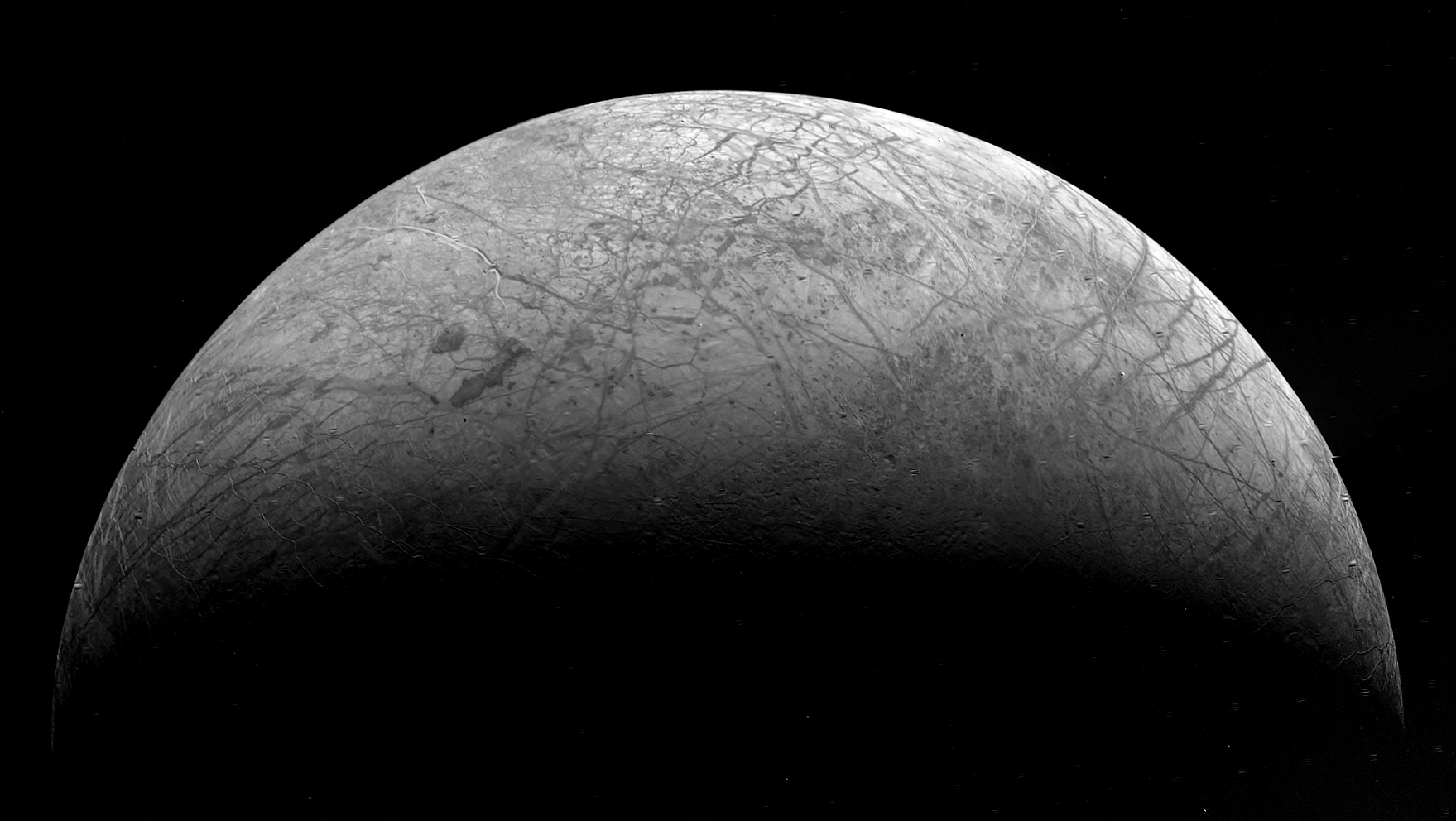
It was impressive even to the naked eye, and the magnified view showed a distinct disk, maybe a quarter the size of a full moon. There were no visible cloud bands, but I could just barely make out two or three moons as points of light lined up on either side. I called out for Ethan to come take a look. As unimpressive as the view through binoculars or a telescope might be, when compared against close-ups from space probes, there’s a certain magic to the knowledge that the dot you’re looking at is really its own world—and I was just starting to appreciate that. Photons had bounced off the glaciers of Europa and the ammonia cloud tops of Jupiter to come directly here, straight into my eyes.
AJ had an easier time picking out the moons. Ethan, about as myopic as I am, shared my struggles resolving detail; it’s not always easy using optics when you have glasses. Eventually they went back down to the campfire, leaving me alone again on the crest of the dune, and I continued my observations, squeezing all I could out of the little pale circle hovering so precariously in my eyepiece.
Eventually something else came over the horizon: the first trace of the Moon. It was a full disk, tinted yellow by the intervening atmosphere, rising slowly from the landscape like some vast balloon. Silhouettes of treetops and a radio mast jutted out in front of it. Until its lower bound came into view, taking flight off the surface, it seemed more like a resident of this Earth than a rocky world orbiting 240,000 miles away. Through the binoculars it was shockingly bright, almost too much to resolve much detail. The Milky Way faded away as the lunar glow overpowered everything else in the sky.

It was at this point that I decided my hilltop observatory had run its course. With the Moon out, the sky was too bright to try for anything fainter than Jupiter and Saturn, so I went down into the valley and popped open another beer. The campfire was, by now, blazing at full strength. My friends had dug it so deep that they made something like a pottery kiln, the charred wood at the bottom glowing bright orange as the surrounding sand concentrated heat. We sat there for a while, talking; AJ and Ethan had already made inroads into the s’mores supplies, and I helped finish them off, growing fat and happy off graham crackers and liquefied marshmallows.
And another beer. I was getting tired, now, and the conversation was steadily dropping into a lull. Eventually I found myself lying flat on the sand, a few paces from the fire, staring up at the dome of stars overhead. From all the way down here the Moon was obscured behind a dune, though an advancing blueish glow marked that it would soon arrive. In parts of the western sky it was still possible to make out the Milky Way.
So many stars—and they were far realer, now, than they’d been when I’d looked at them in passing, glancing occasionally upwards on my late-night walks. How bizarre that someone so interested in space should go as long as I had without bothering to take out a telescope and see. But it was all right. Even now, drunk at the bottom of a sand dune, I could discern the new constellations I had learned, the shapes and places of the universe as viewed from Earth. As soon as I got the chance, I would take out the binoculars again and keep exploring.
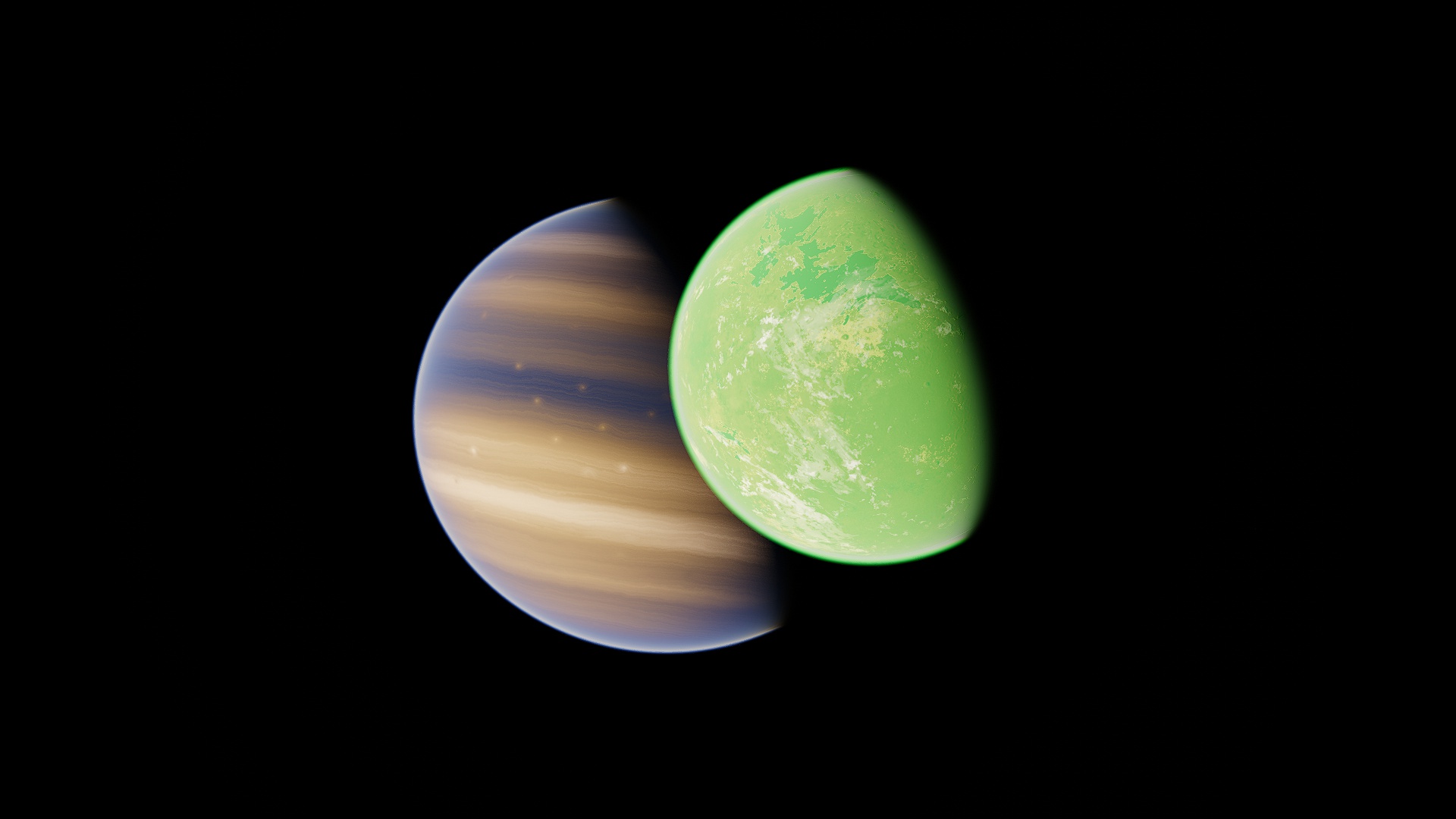
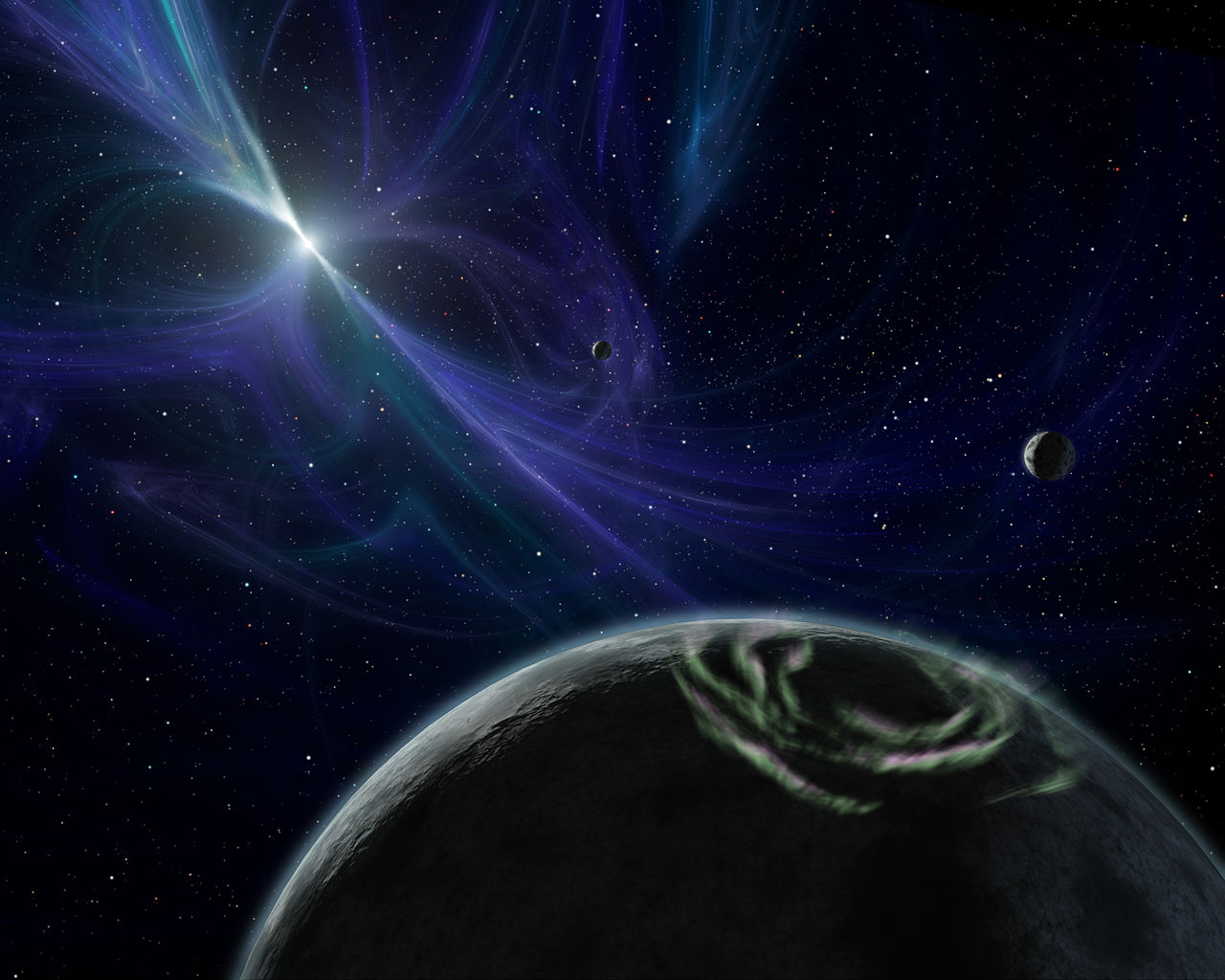
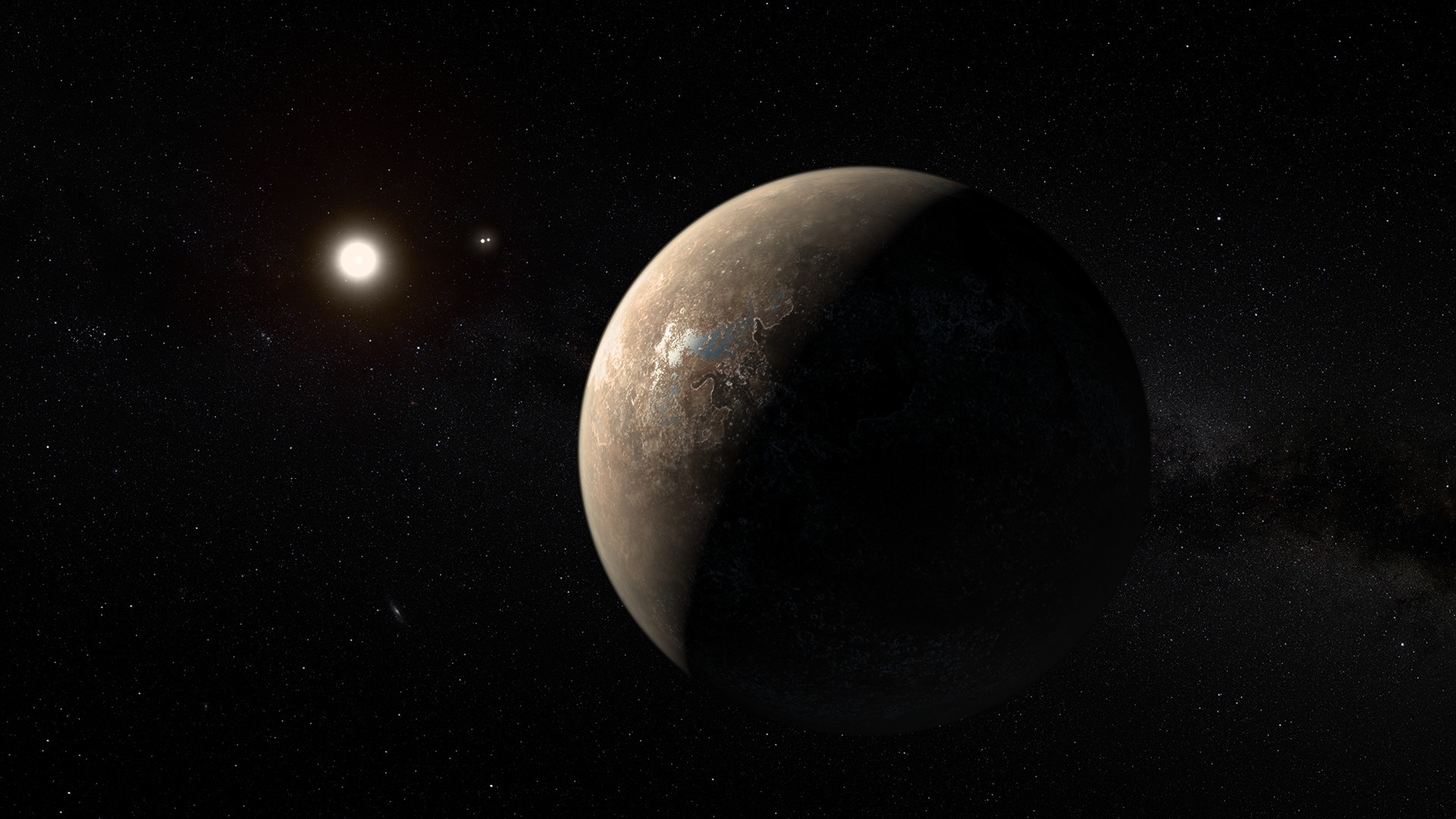
I thought back to a documentary I’d watched as a kid: an exploration of the Solar System, narrated by Patrick Stewart, set to an electronic remix of Holst’s The Planets. It was one of the things that first got me into space, and it still holds a fond place in my heart. Strangely, what came to mind was not so much the documentary itself as its end credits—a quick slideshow of faraway space vistas, playing alongside the original orchestral version of Holst’s “Jupiter,” taking the viewer for one last romp through the universe. There were telescope photos of nebulae; glittering starfields, sparkling with color; eye-popping paintings of planets with twin suns and eerie purple rockscapes. While I lay on the dune I imagined some of those same worlds out there in front of me, tucked away among thousands and millions and billions of twinkling stars. A whole cosmos, infinitely beyond my reach, but still within sight above the dark and windy coast. The notes of “Jupiter” kept playing in my head as I drifted off to sleep.
That’s it for this week, ladies and gents. I should be back Monday with another piece, and from there I’ll experiment with a weekly posting schedule. Thanks for reading!
Discover more from Let's Get Off This Rock Already!
Subscribe to get the latest posts sent to your email.















Nice! Fix the caption on the Benedict C picture. The capture runs into the text. Just add a space. Good piece interesting to see how your memories over it changed overtime.
Thank you! And I appreciate the feedback—it has been duly corrected.
Remembering which way is North is often key! Thanks for sharing this, Nic. Living in northern Minnesota has me looking up nightly to our beautiful sky and, on occasion I see a Starlink satellite train. That always makes me think of you — where the two worlds of technology and space coexist!
Thanks, Cecilia! I should write a post about Starlink sometime…