
For today’s entry we’re welcoming back my friend Eamon Minges—who, as an engineer, brings a welcome dose of technical rigor to this website. You can find his other pieces here, here, here, and here.
I wanted to start off by saying a quick thank you to my good friend Nic Quattromani, the originator of this blog. Nic has once again—and for the first time in a while, I might add—recruited me to write a guest post. Today, I will be providing an important follow up to one of my previous posts, titled “The Orbital Ring.” For those who haven’t read that post, it’s not mandatory to follow along with this post, but I would highly recommend it as a jumping-off point.
Without further ado, let’s quickly go over the idea of an orbital ring as a solution for space launch, and in this case, intercontinental travel. The key importance of an orbital ring is as a piece of infrastructure facilitating the movement of megatons of cargo and millions of people per year, off of Earth, for a very small fraction of the cost of even fully reusable rockets.
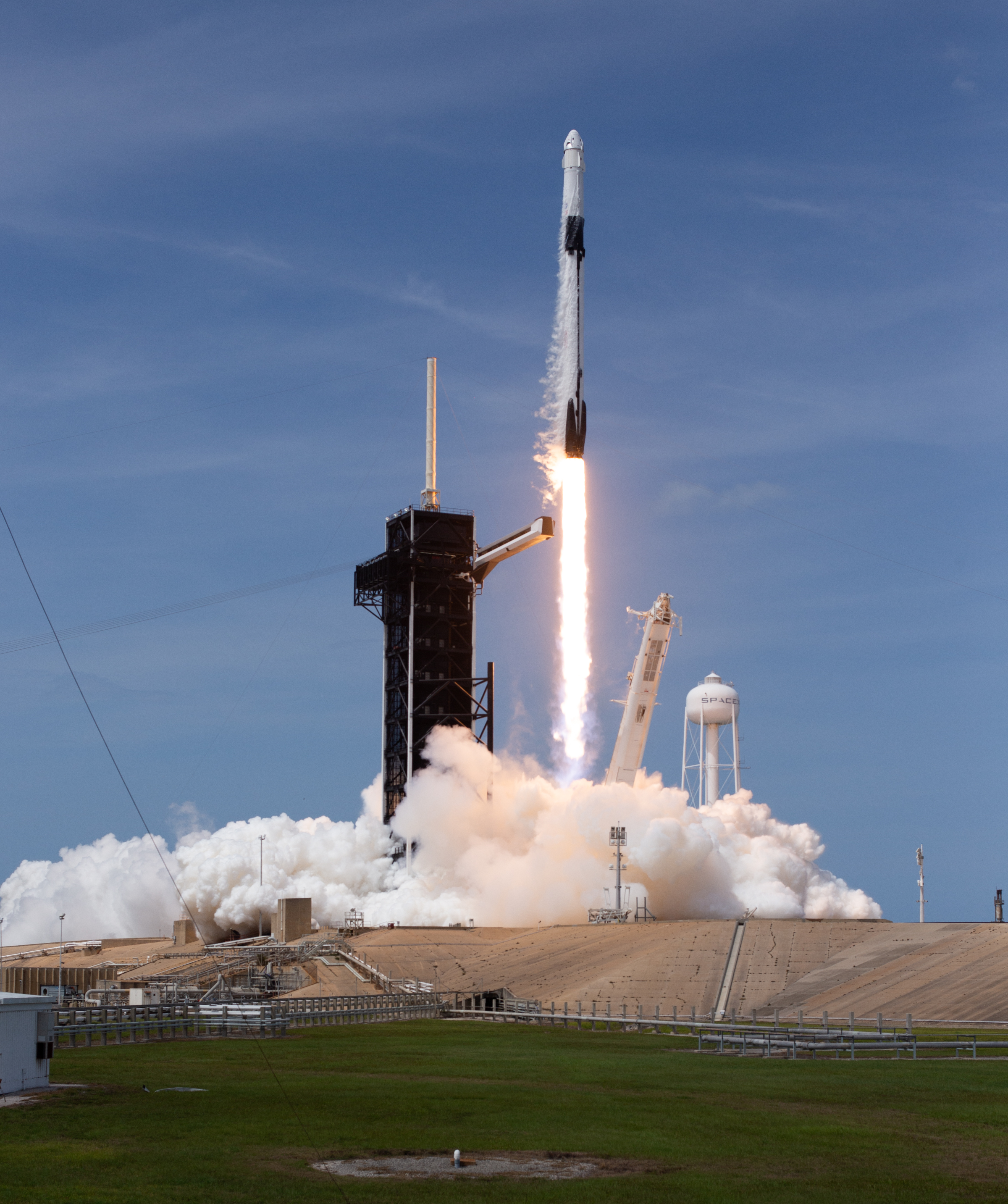
While a fully reusable rocket system will dramatically decrease the cost of getting people and cargo off of Earth and into low orbit, such vehicles represent the wagon train to space, being fundamentally mass and cost constrained. If you want to settle any frontier with a lot of new people, you are better off building a metaphorical railway or highway to the places you want to settle, rather than relying on wagon trains traveling over relatively unimproved paths.

The orbital ring represents our first railway to space, allowing people and payloads to be flung into orbit at much greater volume and much less cost than even reusable rockets. The tethered ring and the Atlantis Project represent the first serious engineering design study concerned with building an orbital ring using current technology and materials. Make no mistake, this is a piece of infrastructure that could be built today, if it had the proper financing and political support. Conveniently, it would also double as a form of low-cost, high speed, zero carbon intercontinental travel. Let’s go over the details of how the tethered ring system could be built, and then how it works.

The manufacture and construction method for the tethered ring are outlined in detail by the Atlantis Project. There would be two factories that would construct the ring segments, one likely in Queensland, Australia (the western edge of the ring) and one in coastal Southern California (the eastern edge of the ring). These two factory locations would extrude maglev ring track as well as the test casing (outer shell) at a rate of roughly 1 km per hour, aiming to create a ring and test casing with a total length of 32,000 km lining the Pacific Rim. The completed ring segments would enter the ocean directly, thus allowing any hazards, such as icebergs or ships, to safely pass overhead without potentially damaging the ring or test casing. To allow for both maintenance as well as redundancy, when the ring is raised, four total rings will be constructed totaling about 128,000 kilometers of ring and test casing. When each of the four ring segments are completed, their ends are connected on the surface of a ship and then submerged to near the seafloor to begin testing. Each ring segment is then moored to the sea floor using anchors. After this process is done, the testing phase can begin!

As a side note, the ring maglev track is isolated mechanically from the test casing using mechanical actuators. These actuators protect the valuable maglev track segments from being damaged by turbulent sea conditions. After a brief testing phase, the moors connecting the ring to the sea floor are allowed to raise, bringing the tethered ring and test casing to the surface of the ocean.
The next phase is the most delicate part of the construction process. Carefully the maglev ring is taken partially outside of the test casing (while still remaining on top of it, to prevent contact with the corrosive sea water) and attached to its tensioning cables. As soon as all of the tensioning cables are hooked up along the entire circumference of the ring, they are anchored to the sea floor by a fleet of construction ships. With the ring’s tensioning cables attached to the sea floor, the ring can now be spun up. A mass of iron material slowly begins to spin up along the maglev track. Over the course of several hours, the maglev ring begins to generate substantial outward centrifugal forces. Due to the ring’s encircling of a large (but not total) portion of the total circumference of the Earth, the outward effect of the spin is mainly upward, causing the ring to drift upward until it floats silently in tension with its support cables at an altitude of 32 kilometers.

The free body diagram of the ring is similar to that of an orbit, and can be done as low as 32 kilometers due to the inside of the maglev ring track being pumped down to vacuum. This ring raising process is repeated for the other three rings until the entire four-ring structure hovers 32 km (or roughly 104 miles) above the sea surface of the Pacific Ocean. The implications for space transportation and high-speed intercontinental transport are truly game changing, in terms of volume and, most importantly, cost.
Now, in order to get an idea for how truly useful this ring structure is, let’s follow two different travelers, each with different destinations. Brian is looking take a mining operator job at a station located on the lunar south pole. And to get to the Moon, Brian must first get into low Earth orbit. Anna, on the other hand, is a resident of Los Angeles looking to visit an old friend in Auckland, New Zealand.
Let’s start with Brian’s journey into Earth orbit. Brian must first take a boat out to a ground station off the west coast of Los Angeles. When he enters the ground station, he is directed to an elevator car. This elevator car will climb up 32 kilometers to the ring structure, where he will board his shuttle at a transfer station mounted on the ring. Brian’s shuttle is about ten meters wide and fifty meters long, and is designed to ride along a maglev sled mounted on a magnetic track inside a launch tube. From the transfer station, Brian’s shuttle spends the next half an hour accelerating to nearly orbital velocity (Mach 17, 5,800 m/s).
When Brian’s shuttle exits the launch track, the shuttle is thrust outward from the centrifugal force that it had built up during its acceleration. Brian’s shuttle completes the final insertion burn into orbit with a small chemical kick stage, needing less than a fifth of its total mass for fuel. In less than an hour and a half, Brian goes from the surface of the Earth into a low orbit (400 x 400 km). Once in orbit Brian’s shuttle can link up to a transfer station where his three day journey to the moon can begin.

Anna, on the other hand, has a journey similar to Bryan’s, but not exactly the same. Anna isn’t going to low orbit, but rather is transiting to another point along the Earth’s surface, specifically from Los Angles to Auckland on New Zealand’s North Island. Anna enters the same elevator and rides up to the same transfer station that Brian did.
This, however, is the moment that their trips diverge from each other. Instead of entering an orbital shuttle bound for space along the maglev mass driver, Anna enters a transport pod, something of a cable car that travels at nearly Mach 3 along the maglev track. After entering the transport pod it accelerates up to Mach 3 and travels swiftly across the Pacific, making the journey to the Auckland transfer station in a mere four and a half hours, instead of the nearly 13 that it would take a subsonic wide-body jet to do the same. Anna then boards an elevator suspended above Auckland and heads down to the surface, making the intercontinental journey in half the time and with zero carbon emissions. Anna even paid less, the cost of the intercontinental journey being more that of a train ticket than that of an airline.
As is seen from the demonstration of the tethered ring’s capabilities, its construction will have a massive impact on the amount of people and raw materials that can be transported off of the Earth’s surface. Cheap, fast, and carbon-neutral intercontinental travel is a plus, but not the main act.
This piece of infrastructure can be leveraged to send megatons of payload off of Earth per year, enabling the buildup of space-based infrastructure to facilitate mankind’s journey out to the Moon, Mars, and the Asteroid Belt. The basic physics and engineering behind this concept are valid. Whether or not something like the tethered ring gets built is dependent on the public will to finance such a project, as well as political buy in from the member countries agreeing to build such a structure.
To reiterate what was stated in the opening, the functional operation of a tethered ring means that the wagon train era to space is over, thus ushering in a era where a railway to space exists.
Big thanks to Eamon for contributing this piece, and to you for reading it. A few items of housekeeping before I go:
- If you haven’t subscribed yet, be sure to drop your email in the box to the right. Never miss a post!
- Moving forward, the posting schedule will be every Sunday at 7:00 AM, not Mondays at 6:00 as it has been.
- That being said, I’m taking the coming week off. Expect to see the next post on the morning of the 25th.
I’ll catch you all then!
Discover more from Let's Get Off This Rock Already!
Subscribe to get the latest posts sent to your email.
























Leave a Reply